Class 6 · History · Chapter 7
Aryans, Mauryans, Kushans, and Guptas
From Secondary History for Pakistan by Dean Smart (Oxford University Press, First Edition)
See this book on oup.com.pk (the publisher's page, opens in a new tab)
Follow more than two thousand years of history in our region: the Aryans, the meeting of cultures in Gandhara, and the Mauryan, Kushan and Gupta empires. Each part explains the chapter in simple words, quotes the book, points out where the book needs correcting, and ends with quick questions to check your understanding.
The big picture
This chapter covers a long stretch of history in the north of the subcontinent, from the arrival of the Aryans to the rule of Harsha in the 7th century CE. Much of it happened in and around what is now Pakistan.
The story in order
- Aryans: Indo-Aryan-speaking groups settle gradually in the north-west and then along the River Ganges, from about 1500 BCE.
- Gandhara: a region in today's north-west Pakistan and eastern Afghanistan where Persian, Greek, Buddhist and local cultures met.
- Mauryan Empire (about 322–185 BCE): the first empire to rule most of the subcontinent. Its most famous ruler was Ashoka.
- Kushan Empire (1st–3rd centuries CE): a dynasty from Central Asia whose greatest ruler was Kanishka.
- Gupta Empire (4th–6th centuries CE): remembered as a golden age of art, literature and learning.
- Harsha (606–647 CE): reunited many small kingdoms in the north after the Guptas.
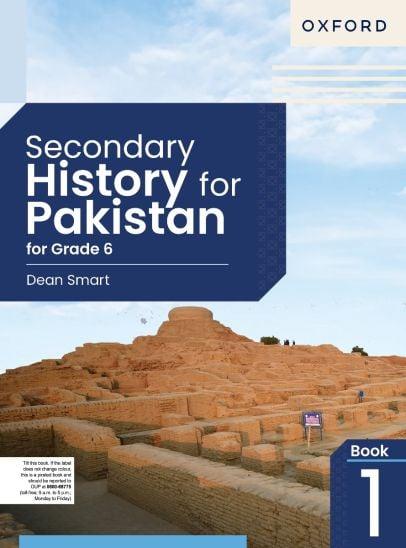
The chapter opens with a photograph of Takht-e-Bahi, the ruins of a Buddhist monastery near Mardan in Khyber Pakhtunkhwa. Ruins like these are evidence: they show that Buddhist monks once lived, prayed and studied in this region.
View of the Buddhist monastery Takht-e-Bahi
Who were the Aryans?
The book calls these people Aryans. Historians today use the name Indo-Aryan mainly for a family of languages and the people who spoke them, not for a race. Indo-Aryan languages, such as Sanskrit, spread into the subcontinent with these groups.
Around 1500BCE, Aryan migrants from the grasslands of Central Asia started to make their way across the Hindu Kush Mountains into the north-west of the subcontinent into the territory of the Indus Valley Civilisation (IVC).
They did not arrive all at once. The book's map and timeline show a slow spread over centuries: first into the north-west near the Indus, then east along the Ganges. They brought herds of cattle, sheep and goats, and they had horses, chariots and weapons of bronze and later iron. Over time they gave up moving from place to place and settled down as farmers.
Over time, Aryan influence spread into local beliefs, culture, religion and language. Most languages of northern South Asia today, including Urdu, Punjabi, Sindhi and Hindi, belong to the Indo-Aryan family.
Key points
- Indo-Aryan-speaking groups moved gradually from Central Asia across the Hindu Kush into the north-west of the subcontinent, from about 1500 BCE.
- They settled first near the Indus and later spread east along the River Ganges.
- They brought cattle, horses, chariots and metal weapons, and slowly became settled farmers.
- Their languages and beliefs shaped the region for thousands of years.
We have very little solid evidence about this early period, so the literature that survives is precious. It helps us understand the society and values of the time, and it is still very important in the region's religious life.
- Ramayana
- A long poem about Prince Rama. When his wife Sita is kidnapped by Ravana, the demon king of Lanka, Rama fights to rescue her: a story of good against evil. The book says it has 24,000 couplets (pairs of lines).
- Mahabharata
- A long poem about a great war between cousins, the descendants of King Bharata, fought at Kurukshetra. It mixes history with lessons about right and wrong, and took its present form around 400 CE.
- Vedas
- The oldest Hindu scriptures: four collections of hymns and prayers in Sanskrit.
- Brahmanas
- Texts attached to each Veda that explain how the Vedas are used in rituals.
Myth-history is a record of the past that includes stories or myths that have been made up or embellished (made better by adding things).
Myth-history is still useful. Even when a story is not accurate history, it tells us what people believed and valued. The danger is that a popular story can become the 'traditional version' of history and be hard to correct, even when it is wrong. The book also warns you to watch out for biased websites and resources that twist the past for political reasons. Always ask who made a source, and why.
Practise this section: 10 quiz questions →How was Aryan society organised?
Most of what we know about the Aryans comes from Sanskrit writings that were passed down over many centuries.
Sanskrit sources
- The four Vedas: collections of hymns, prayers and worship.
- The Brahmanas: texts explaining how the Vedas are used in rituals.
- The Upanishads: later Vedic texts that became the basis of Hindu philosophy.
- The Puranas: myth-histories from around 400 CE.
At first the Aryans worshipped the forces of nature: the Earth, the Sun and Moon, rivers, water and fire. Over time these forces were imagined as people with human characters. This belief system later developed into Hindu ideas about the gods.
- Personification
- Giving human qualities to animals, objects or forces of nature.
The Vedas taught that people should behave correctly, following a moral code that depended on their birth, age and place in society. Early rituals included sacrifices of horses and cattle. The Vedas also contain knowledge of medicine, known as Vedic medicine.
The Aryans were mainly animal farmers, living in tribal villages looking after crops such as wheat and barley in small farms. Wealth was measured by the number of cows or horses owned by someone.
Villages and small market towns traded by barter. To make new fields and pastures, people cut down forests, let the trees dry and burnt them. Trade along the river stayed small and local. By about 500 BCE most of northern India was being farmed with ploughs pulled by oxen.
- Barter
- Trading goods for other goods, without using money.
- Painted Grey Ware
- A grey pottery with painted designs. When archaeologists find it, many take it as a sign of an Aryan-period site.
Some tribal towns grew important and came under one overall chief. From these, sixteen small states developed. Rulers appointed officials to collect taxes from market traders, merchants and other people. The taxes paid for protection, for law and justice, and for regulating trade.
Sanskrit literature calls the Aryan lands Aryavarta. Each was led by a chief, or raja, whose son usually took over after his death. The raja was supported by priests called Brahmins. There were five main warrior tribes, which sometimes lived in peace and sometimes fought each other.
War was described as ‘the search for cows.’
Cattle were wealth, so raids to capture cows were a common reason for fighting.
The four castes, as described in the book
- Brahmins: priests, responsible for rituals, prayers and sacrifices.
- Kshatriyas: warriors who protected society.
- Vaisyas: commoners, merchants, farmers and skilled craft workers.
- Sudras: servants and labourers who did the hardest work.
- Outcastes: people kept outside the system, made to live outside villages and treated badly by everyone else.
People were not allowed to change caste, to mix with other castes or marry into a different caste.
The Gandhara Civilisation
Gandhara was a region in what is now north-west Pakistan and eastern Afghanistan, reaching to the foothills of the Himalayas. The Hindu Kush mountains formed its northern border. It included the Peshawar Valley, the hills of Swat, Dir, Buner and Bajaur, land towards the Kabul Valley, and the Potohar Plateau. Peshawar and Taxila appear on the book's map.
Remember that Kandahar is a city, while Gandhara was a whole region.
Gandhara sat on busy trade routes.
The area was on important sea and land trade routes in the ancient world, which linked the region to China, Persia, Greece, and Rome.
Traders brought ideas and beliefs as well as goods, so Gandhara developed a mixed culture with Greek, Buddhist, Jain and Hindu influences.
- Factor of influence
- Something that shapes how history happens, such as chance, technology, money, ideas, religion, power or the actions of a key person.
In the 4th century BCE this area was part of the Persian (Achaemenid) Empire, but quarrels among its rulers weakened it. Alexander of Macedon defeated the Persian armies and moved east. In 327 BCE he married Roxana, a princess from Bactria, to win local support. Then he asked the local rulers to accept him: the ruler of Taxila agreed, but the ruler of Gandhara and three others refused.
In response, Alexander invaded these provinces in 326BCE, and in a final major battle of the campaign at Jhelum (also called the Battle of Hydaspes River) defeated the local ruler, King Porous.
Alexander's army refused to go further east and turned back at the River Beas (Hyphasis). He died in 323 BCE, aged 32.
Gandharan art mixed Greek styles with local and Buddhist traditions. Early Buddhist art did not show the Buddha as a person; it used symbols instead. Later, the Buddha became the main figure in many statues and carvings, often with wavy hair and deeply folded robes in a Greek style.
- Relief sculpture
- A carving in which the figures stand out from a flat background.
The book's table lists other achievements of this period. The Sushruta Samhita is a medical textbook in Sanskrit, and drawings of surgical instruments show that doctors developed new medical and surgical techniques. A game called Caturanga, 'the four divisions' of an army (infantry, cavalry, elephants and chariots), was invented and later developed into chess.
Practise this section: 10 quiz questions →The Mauryan Empire
After Alexander's death, Chandragupta Maurya rose to power. He overthrew the Nanda dynasty and took control of land across northern, central and western India. His son Bindusara and his grandson Ashoka ruled after him.
The Mauryan empire is significant because it was the first empire to stretch across most of the Indian empire; administrating the regions from Bengal to Afghanistan.
In other words, it was the first empire to rule most of the subcontinent, from Bengal in the east to Afghanistan in the west.
Ashoka ruled from about 268 to 232 BCE (some sources start his reign in 273 BCE). As a prince he had been a governor in the north-west, based at Taxila in the Gandhara region. He set out to conquer the whole of India and fought a terrible war against Kalinga, on the east coast.
The bloodshed of the war seen in the death of 100,000 men changed him and he converted to Buddhism.
Ashoka spent the rest of his life spreading Buddhism. He held the Third Buddhist Council in about 250 BCE, built stupas, and had the Buddha's teachings written on stone pillars. He made Taxila a centre of Buddhist learning. He is remembered as one of the greatest rulers in history because he cared about the welfare and happiness of his people.
- Stupa
- A dome-shaped mound built over relics (remains or objects linked to the Buddha or other holy people), used as a place of worship.
Trade flourished under the Mauryas, and the empire had diplomatic contact with the Greek kingdoms to the west.
Contact with other empires also shows in royal titles.
Practise this section: 10 quiz questions →The Kushan Empire
The Kushans came from Central Asia, united under their king Kadphises. They entered India around 50 CE, defeated the Scythians and the Parthians, and became a powerful force in the region.
The greatest Kushan emperor was Kanishka, who ruled from around 120 to 150CE.
Kanishka was famous for his conquests and his government. Because the Scythians in the west accepted him as their master, the Kushans controlled the trade routes of the region, and the empire grew rich from trade.
Kanishka was a wise ruler who allowed people to worship as they pleased.
He was a Buddhist himself and built many stupas. He supported art and literature and invited scholars to his capital, and Taxila became a centre of learning. Sculpture flourished at Gandhara and Mathura during his reign. This is the link between Gandharan art and the Kushans: Kushan rulers supported the artists.
Key points
- The Kushans came from Central Asia and entered India around 50 CE under Kadphises.
- Kanishka, their greatest ruler, reigned from about 120 to 150 CE.
- Control of the trade routes made the empire rich.
- Kanishka allowed freedom of worship, built stupas and supported art, literature and learning.
The Gupta Empire
The Gupta Empire is a period usually remembered as a golden age of India because of the numerous achievements in art, literature, and science.
The family began small. Sri Gupta ruled small kingdoms in Magadha (modern Bihar) between about 240 and 280 CE. Ghatotkacha ruled after him, and then came Ghatotkacha's son, Chandragupta I, who turned the family's lands into a great empire.
Chandragupta I came to the throne in 320 CE and ruled until about 335 CE. He married Princess Kumaradevi of the Licchavi people, from the region near Nepal. The marriage brought him wealth and a powerful army, which he used to expand his empire. He chose his successor, Samudragupta, at an assembly of councillors and members of the royal family, which helped power pass on peacefully after his death.
Gupta rulers in order
- Sri Gupta (about 240–280 CE)
- Ghatotkacha (about 280–319 CE)
- Chandragupta I (from 320 CE): founded the empire
- Samudragupta: expanded it
- Chandragupta II (about 380–415 CE): expanded it further
The book's map shows the empire growing in three stages: the lands of Chandragupta I, then land added by Samudragupta, then land added by Chandragupta II.
The Guptas were very wealthy, and they spent some of that wealth as patrons of art and literature. Art was mostly religious. A life-sized copper statue of the Buddha, six feet tall, was made in this period, and the paintings in the Ajanta caves are famous for their bright colours and natural scenes from the life of the Buddha.
Literature during the Gupta period was secular, including ornate court poetry, particularly epic poetry.
- Patron
- Someone who pays for and supports artists, writers or scholars.
- Secular
- Not religious: about everyday life, rulers and society.
Writers used two languages: Sanskrit, used mainly by the upper classes, and Prakrit. Plays were popular too, and most of them were comedies. The book also shows an iron pillar from the Gupta period: an example of material evidence that helps historians learn about the past.
Practise this section: 10 quiz questions →How do we know? Evidence, decline and Harsha
Historians use two main kinds of evidence for these empires.
- Material evidence
- Physical remains and objects, such as buildings, coins, pillars and statues.
- Written evidence
- Texts, such as travellers' accounts, inscriptions and books written at the time.
Coins are especially useful. Indo-Greek kings put their portraits and names on coins, which helps historians identify them and date their rule. The most famous Indo-Greek king was Menander, also called Milinda (about 160–135 BCE). Indo-Greek kings ruled parts of the region until about 50 BCE, when the nomadic Scythians replaced them.
Chinese Buddhist pilgrims left valuable written accounts. Fa Hsien (also spelled Faxian) travelled through the region for eleven years and wrote about the reign of Chandragupta II (about 380–415 CE), which impressed him.
In the fifth century, invasions from the north and west, including attacks by Hun tribes from Central Asia, split the Gupta Empire into smaller kingdoms. Many monasteries were destroyed and monks were killed. By the middle of the sixth century the empire had fallen.
Then Harsha (Harsha Vardhana), the son of the king of Thanesar, became king at just 16.
He ruled from 606–647CE and united the small kingdoms from the Punjab to central India.
Harsha took the title Maharaja, made Kannauj his capital and invited philosophers, artists and scholars to his court. The famous university at Nalanda was at its height during his reign.
We know about Harsha from the Chinese scholar Xuanzang (also written Huen Tsang or Hiuen Tsang), who described him as a fair and caring ruler, and from the Harshacharita (Deeds of Harsha) by the Sanskrit writer Bana. When you read sources like these, ask how reliable they are: a writer who admired a king, or who was a guest at his court, might describe only the good things.
Practise this section: 10 quiz questions →What was religion like during this period?
Many of the great texts of the ancient religions were created or written down in this period. Buddhism, Jainism, Hinduism and Zoroastrianism were all important in different places, and people also came into contact with Judaism, Christianity and Greek and Roman ideas. Rulers mattered too: when a king such as Ashoka or Kanishka supported a religion, it could spread widely through his lands.
The book compares three religions that began in South Asia. Each has many traditions, so the summaries below are simplified.
Buddhism
- Based on the teachings of the Buddha, Siddhartha Gautama, in northern India.
- Teaches that beings are reborn many times. The aim is Nirvana: freedom from suffering and from the cycle of rebirth, reached through right living and meditation.
- Holy books named in the chapter: the Tripitaka and the Mahayana Sutras.
Hinduism
- Grew out of the Vedic religion. The book says it took shape between about 500 BCE and 300 CE in north India.
- Has many traditions. Many Hindus see one supreme reality, Brahman, expressed through many gods and goddesses.
- Teaches rebirth, and liberation (moksha) from the cycle of rebirth.
- Practices include worship, meditation, yoga and pilgrimage to holy cities. Dharma means duty, right conduct and the order that holds life together.
- Holy books named in the chapter: the Vedas, the Upanishads, the Bhagavad Gita and the Ramayana.
Jainism
- Its teachings come from Mahavira (also called Vardhamana), about 550 BCE, in eastern India. Jains see him as the last of a line of great teachers.
- Aims to free the soul completely from the cycle of rebirth through non-violence, self-discipline and meditation.
- The Five Great Vows: non-violence, truthfulness, not stealing, chastity (complete celibacy for monks and nuns) and not being attached to possessions.
- Holy books named in the chapter: the teachings of Mahavira.
The book's table also gives numbers of modern followers. These are rough estimates with no date, so do not memorise them.
One discussion question asks about the effects of Hinduism on Buddhism. The two traditions grew up side by side in South Asia and share some ideas, such as rebirth. Sharing an idea does not, on its own, prove that one religion borrowed it from the other.
Practise this section: 10 quiz questions →Looking back
Three empires compared
- Mauryans (late 4th to early 2nd century BCE): the first empire across most of the subcontinent. Ashoka spread Buddhism and cared for his people's welfare.
- Kushans (1st to 3rd century CE): controlled the trade routes and grew rich. Kanishka allowed freedom of worship and supported Buddhism, art and learning.
- Guptas (4th to 6th century CE): a golden age of art, literature and learning, built through alliances, conquest and careful succession.
Before you take the quiz, try answering the book's Test Yourself questions in your own words. Where the book needs correcting, use what you learned in the correction boxes.
Timeline
Put these events in time order, from earliest to latest. Dates use the historians' dates from this lesson.
- 1Alexander defeats King Porus at the Jhelum
- 2Harsha rules from Kannauj
- 3Indo-Aryan groups begin to settle in the north-west
- 4Kanishka rules the Kushan Empire
- 5Chandragupta I founds the Gupta Empire
- 6Ashoka's war against Kalinga
- 7Chandragupta Maurya founds the Mauryan Empire
Key terms flashcards
Read the term, say what it means, then flip the card to check. You know 0 of 14 terms.
Card 1 of 14Tap the card to see the meaning
Image: Sahibdin · Public domain · source
Ready to test yourself?
Practise with 156 questions on this chapter, with feedback after each answer, or try an exam-style quiz.
Take the Chapter 7 quiz